writing
The Last of Us Part II: Revenge Is Not a Threshold, It Is a Barrier
The Last of Us Part II frames revenge not as a threshold to healing, but as the barrier that erases meaning and delays the work of rebuilding it.
Revenge. Hurting or harming someone as a means to set things right. In media, it is both a theme and a genre, and when it appears it usually needs no introduction. A character has been killed, a person's honor has been damaged, even something as small as an item has been stolen, and you have the need for revenge on your hands. But is it the solution, or does it only delay moving on?

The Last of Us Part II is not a game about revenge. Not entirely, at least. To explain that, we need to start at the beginning, with Ellie. Ellie has a life, friends, hobbies, community. She has people that love her, and she loves them back. She has everything a person at her age needs, despite living in the post-apocalypse. Shortly after, she loses Joel and the game truly kicks off. We then follow Ellie as she starts to walk the path of revenge and self-erasure. From the very first day after Joel's death, she forsakes her community, friends, and support system in favor of revenge by setting off towards Seattle. The first major instance where Ellie narrows herself is when Dina reveals her pregnancy. Here, Ellie calls her a liability rather than responding with the love and care she otherwise has for Dina. She apologizes quickly but the damage is done: she's slowly choosing Abby's death over her instinct to care and empathize.
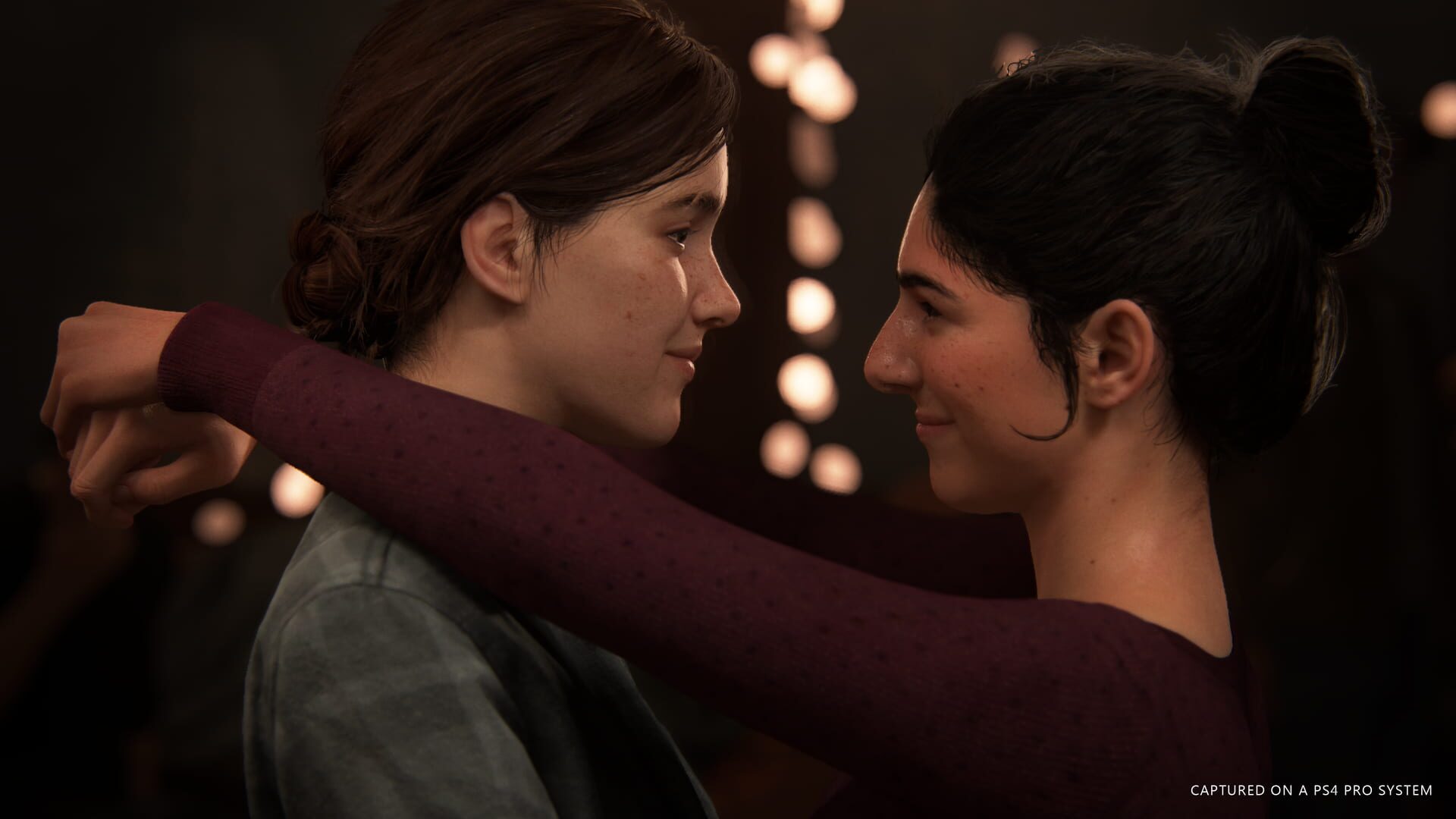
The moments where Ellie loses a piece of herself keep piling on, and each piece is larger and larger. Torturing an already-dying Nora leaves her deeply shaken, and she is horrified after killing Mel and Owen, especially after learning about Mel's pregnancy. These two moments show that she is still capable of feeling guilt and empathy, but she's repeatedly subverting those instincts in favor of the mission. The deeper down this path she goes, the more those instincts begin to break.

In the epilogue, we see Ellie having rebuilt some of her life: she has Dina, JJ, a home, and she's safe. Until Tommy brings news about Abby's whereabouts. Despite knowing the consequences of going, she once again decides to abandon what makes her a person and pursue vengeance over maintaining the life she has managed to rebuild.
Before moving on with this analysis, we need to go back to the beginning and dig into Abby's half of the game. Her true playable sections follow her after she's achieved vengeance, which lets us follow a person beyond the threshold of revenge. The Abby we meet is still the hollowed-out, post-revenge Abby. The "meaning" she had up until that point is no longer relevant; Joel is dead. Nothing about her life has changed: she remains a strong soldier, her people are scattered around the WLF bases, and she has her orders. She ignores those orders and goes in search of Owen, her ex and long-time friend. In this moment, the part of Abby that was buried under revenge is beginning to climb back up. Along the way she meets two Seraphite children, helps them out, and then leaves. Leaving them gives her a pang of guilt she can't explain, but one that pushes her to return to them and bring them with her to the Aquarium. Returning to Yara and Lev is the event that kickstarts Abby's return to personhood after losing herself to revenge. For a reason she can't quite understand, Abby ends up facing her immense fear of heights, goes through Seraphite-controlled territory, and faces the game's most dangerous enemy, just so she can help these children. She even ends up going to the Seraphite island and turns against her WLF comrades, because Yara and Lev are becoming her meaning, her reason to push forwards. On the island they lose Yara and make haste to come back to the mainland, where Abby learns Ellie has murdered Owen and Mel. This sparks a brief relapse into revenge, during which she nearly kills Ellie and Dina, but Lev's presence stops her from following through and she lets them go.
Over the course of the game we live the same three days twice, once to follow Ellie's path of revenge and again to see what happens beyond revenge. We see the path walked by two people, one of whom is far in front of the other. Ellie is where Abby once was: bent on revenge, hurting or abandoning those she loves, in an effort to locate and kill Abby. Abby's journey represents what comes after this intense self-destruction. Ellie and Abby are on the same path up until the moment Ellie gets the chance to finally achieve her goal, when their paths suddenly diverge.
Throughout the entire game, we see Ellie descend into vengeance, pursuing Abby as though killing her will finally let Ellie move past the traumatic image Joel has become in her mind. Just before stepping over the line, her mind does exactly that: it brings Joel back through a positive memory, sitting on his porch, playing his guitar on the night before his untimely death. This is what drives Ellie to spare Abby: she realizes she no longer needs her to get what she wants. Abby has become irrelevant, and killing her achieves nothing. This realization is what Abby never got before killing Joel: she finally got her revenge, and it fixed nothing. Her father is not back, her world is not suddenly normal. She's ended up only less of a person after being on the hunt for so long, hurting and abandoning those she loved.
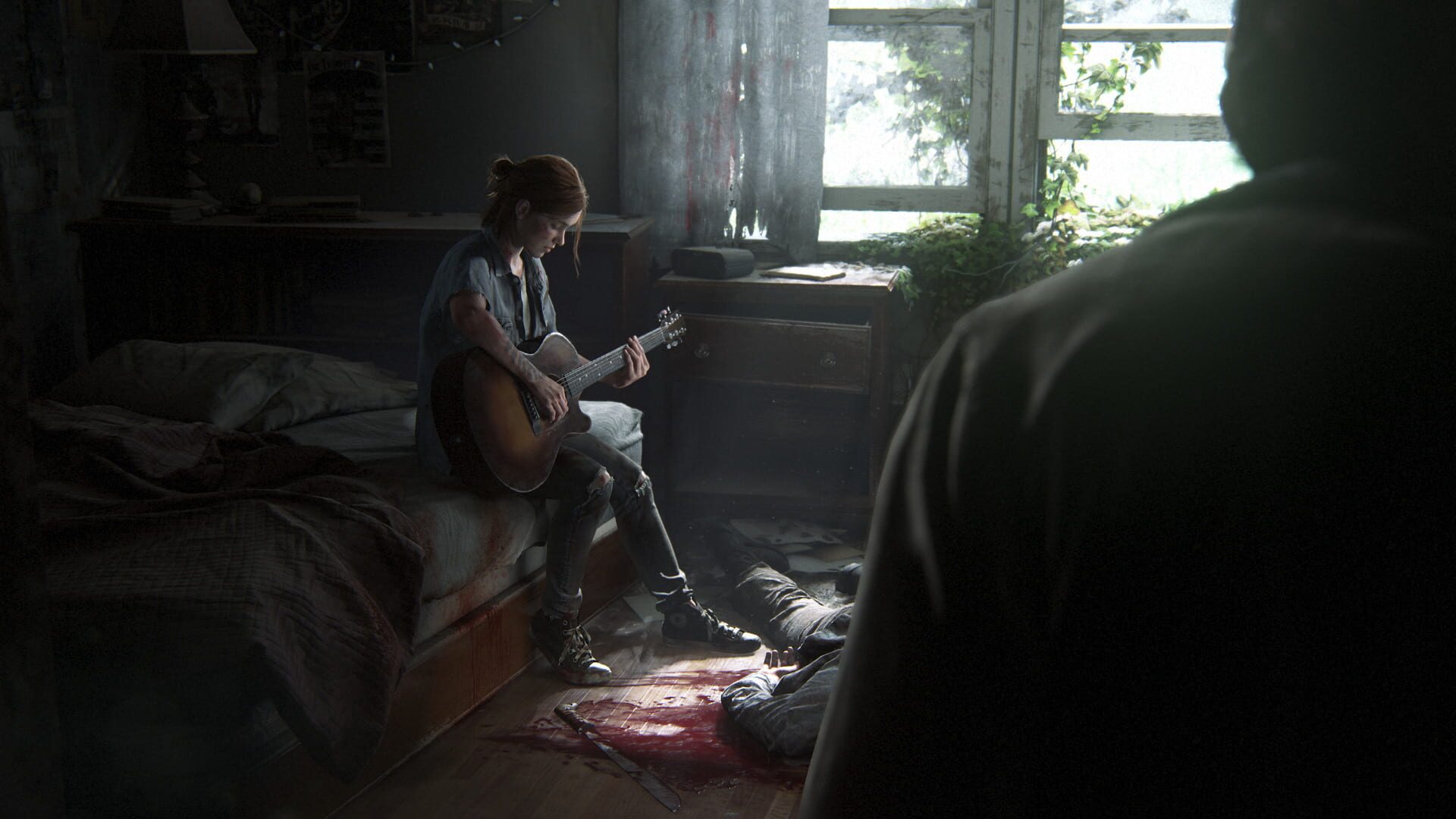
The Last of Us Part II is a game about revenge, and a game about what happens after revenge. It walks through the stories of two people on the same core path but at different points. We see what happens on the part of the path that moves towards revenge: self-erasure, and we also see what happens on the other half of that path, the desperate attempt at rebuilding meaning while trying not to lose yourself again. Over the course of the game we discover that revenge is not the gateway to rebuilding ourselves; we learn that it is exactly the thing stopping us from doing so.