The First Berserker: Khazan Review
Since building up a tolerance for the frustration that soulslike games can induce, I’ve been trying to play as many of them as I can. If I’ve heard of it, I’ve probably played it, though I don’t actively hunt for new titles. The First Berserker: Khazan is the latest soulslike to catch my eye, and it captured my heart after the very first boss fight.
Set in the Dungeon & Fighter universe, FBK casts you as Khazan, a once-revered army general now betrayed, battered, and bound to the Blade Phantom’s dark power. The story won’t win any awards for originality, but the game’s stunning visuals and tight, challenging gameplay more than make up for it.
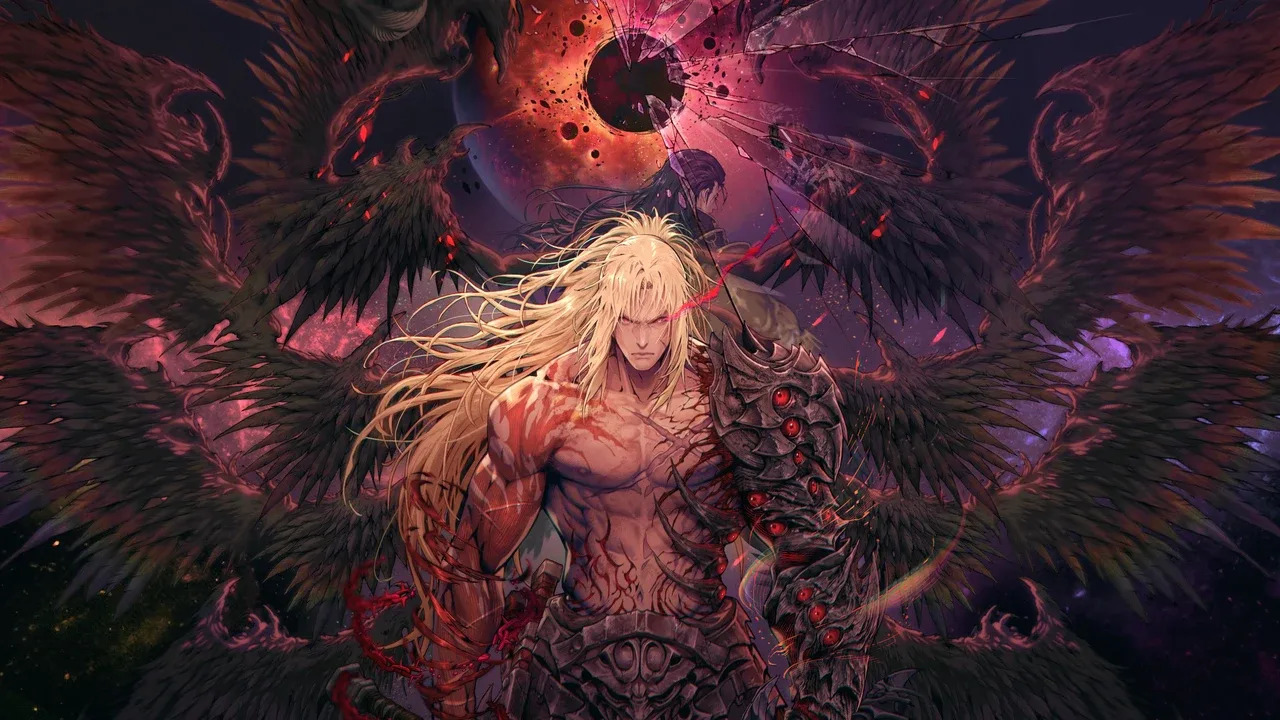 Image:Neople via IGDB
A tired revenge tale
For a game aiming to fit in with the giants in the genre, namely the entire FromSoftware catalogue, The First Berserker: Khazan tells a story of revenge, and dare I say, suffers the consequences. The trope feels exhausted by this point, and with so many games managing to successfully weave elements of revenge to build something bigger, such as Ghost of Tsushima, to name at least one, FBK’s story falls short.
Betrayed and imprisoned by Emperor Pahlmerier and many others within the Pel Los Empire, we begin our journey with Khazan just as he is possessed by the Blade Phantom: an amalgam of the ghosts of powerful warriors, sent by order of Charon, the gatekeeper of the Netherworld. After defeating the entity in combat, Khazan strikes a deal—one in which they agree to aid each other on their quests. Khazan gains the Phantom’s power, and in return, the Phantom takes up residence within his body, forever bound to fulfill Charon’s command to mend the Netherworld.
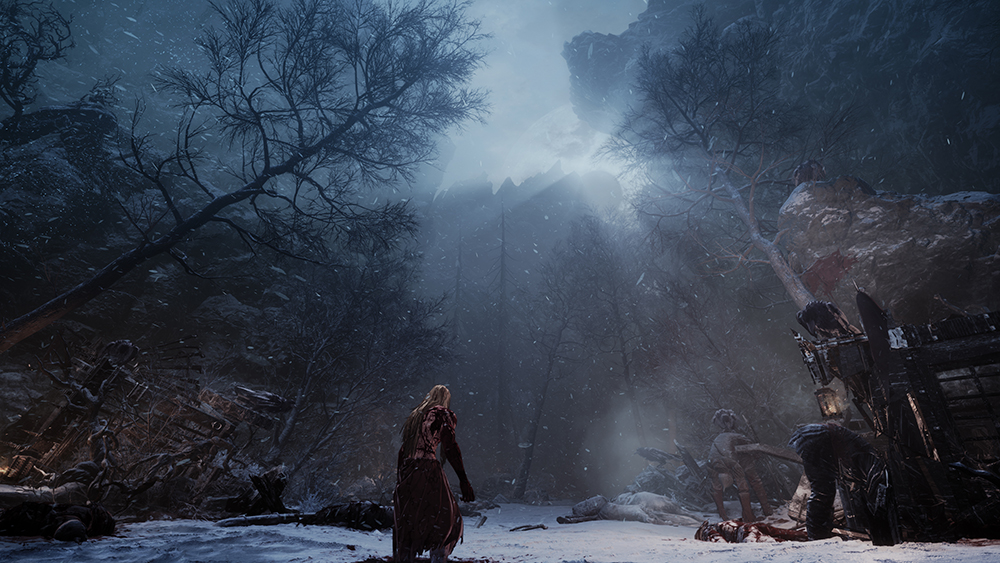 Image:Neople
Missed Connections
As the story continues, it hits its first major pitfall. There doesn’t seem to be any flow in the events. Characters appear almost out of nowhere, and grand revelations happen with almost no buildup. I think this issue stems from the way the gameplay is structured, or more specifically, how the gameplay structure was handled during writing. Instead of having a big, interconnected world, like in the Dark Souls franchise for example, or an open world like Elden Ring, Khazan gives you smaller, mostly linear maps, each of them corresponding to a main or a side quest and ending with a unique or a reused boss, respectively.
This disjointedness bleeds into the way Khazan deepens his relationships with all side characters. There is no exposition, no shared moments, just a sudden shift in the way someone speaks to Khazan. One moment you’re fighting someone to the death, and the next they are sworn to you because of reasons. I don’t know if most, some, or none of these characters are carried over from the main Dungeon Fighter Online games, of which FBK is a spinoff. Maybe the writers assumed players would already know who they are and how they fit into the story, or maybe, in trying to balance gameplay demands and lore, they simply didn’t have the space to build the kind of meaningful connections that would make these relationships feel earned. Either way, the result is something that comes off a bit awkward and underdeveloped.
A feast for the senses
To give praise where praise is due, The First Berserker: Khazan thrives in sound and visual design. Wonderfully cel-shaded, it goes in a grimey, yet still vibrant dark fantasy direction. The moment you first see the moon looking at you, you immediately know what to expect, and the devs do too. Every chance they get, the moon is in the background, and it never gets old.
With a main currency named Lacrima, Latin for “tear,” but strikingly red, the game is unafraid to get visceral. Blood spatters across the screen with each swing, and Khazan’s brutal animations are something you don’t just see or hear, but feel. Sonically, visually, and, if you’re on a controller, tactually, every blow feels heavy. The audio design is especially sharp: weapons crunch, slice, and tear with a wet, gory edge that makes encounters addictive.
What elevates it even further is the music. Boss fights, as usual in these kinds of games, are scored with tracks that elevate each fight far beyond itself, ebbing and flowing with the stage of the fight.
Naturally, when talking about these things, we have to mention the voice acting. The entire cast brings life to the mostly underwhelming dialogue, elevating lines that might otherwise fall flat. The writing leans on familiar tropes, but the performances give it texture, something to latch on to, sometimes even making a conversation land purely through tone and delivery.
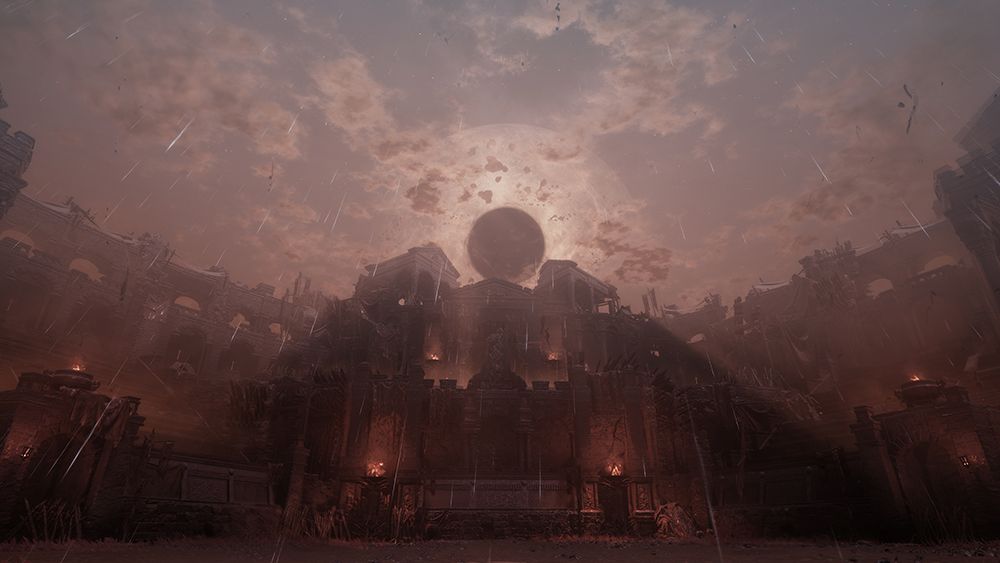 Image:Neople
Slaughter that sticks
The First Berserker: Khazan shines in almost every aspect of its gameplay elements. If you’ve heard people remark that it has one of the best ‘soulslike’ combat systems, you’ve heard right.
First of all, the core systems: defense and offense.
Defense comes in two flavors: dodge and guard, both have a loose and a tight timing, with the latter being called ‘brink’ (brink dodge, brink guard). Hitting that brink timing rewards you with enhanced dodge attacks after a brink dodge, and a hit to your opponent’s stamina if it’s a brink guard. Simple and effective.
Offense gives three choices to pick from depending on your palate—sword+axe dual wield, a greatsword, and spear, my personal favorite. Each weapon class has its own pros and cons: dual wield has a strong single-target focus, with fast, long, high-damage combos, the big sword likes to control crowds with slow, cleaving slashes and charged attacks. The spear sits at a good middle ground, focusing on making you feel like a never-ending onslaught of attacks, with good reach and solid crowd control, and I admit that I am very biased towards it.
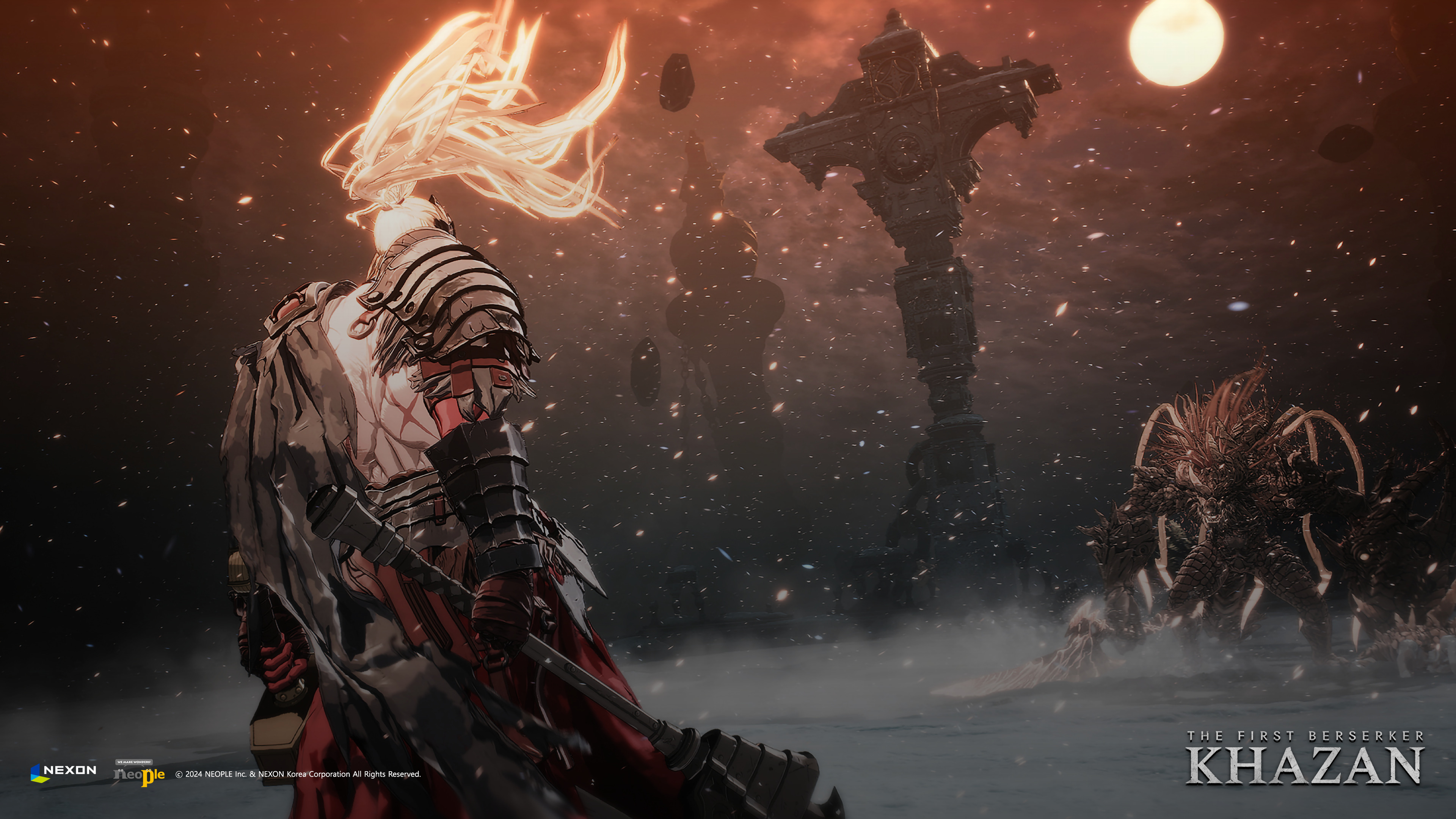 Image:Neople
What fully separates combat in this game from all the others is how much it deepens as you level up. The game offers deep skill trees for every weapon type, as well as a generic tree for character-level upgrades. To keep things short, each skill tree focuses on further enhancing each weapon’s strengths while smoothing out its negative aspects. The greatsword tree, for example, tries to add some speed and faster attack chaining to the otherwise slow swings, while the spear tree gives you access to an even bigger avalanche of attacks; by the end of it I was only stopping to heal or deflect an attack I can’t attack my way through. I can’t speak too much on the dual-wield side of things, because I only played it for one or two missions before realizing that I just don’t click with it. My main gripe with it is that it felt a bit too complex. It seemed like it wanted me to keep track of too many different combos and interactions. Which brings us to our next point.
Having dabbled in fighting games, just a little since I’m pretty terrible at them, I can still see how FBK builds on Neople’s experience crafting a successful fighting game, DNF Duel (its success confirmed by a quick online search). Khazan’s combat requires minimal memorization for combos and chains, often needing just one or two extra inputs to pull off. Some moves are as simple as pressing two buttons, with one acting as a hold-down modifier. You can chain these skills from other abilities, basic attacks, or even after a brink guard or dodge. All this serves as a nice way to round off some of the edges of combat, making it fluid, responsive, hard-hitting, and most importantly, satisfying.
Adding another layer to the deep build system are armor sets, which offer an additional point of customization. Each weapon class comes with different sets that further modify the way you play with it. The more pieces from the same set you equip, the more set buffs you gain, with some of these being a completely new passive or active skill in the skill tree. Some of these buffs can also be conditional elemental damage modifiers, applying elemental buffs to your weapon if you satisfy the condition, such as performing a brink guard or dodge.
Some lost blood
Unfortunately, some gameplay elements did fall short for me. If you’ve read any of my other reviews on this genre of games, you’ve probably noticed a trend where I tend to dislike it when the developers punish me for dying to a boss by making me run for ages until I reach the boss entrance. It is an unnecessary punishment for something that is expected in these games: dying to a difficult enemy.
Overall, some areas were sparse with their checkpoint offerings, which isn’t exactly a bad thing as it offers a different form of challenge via survival, but it does tend to become unwelcome the closer you get to the end, especially if you’ve spent a big chunk of time in the game already and just want to finally reach the end. I don’t consider that a direct negative, but it is worth mentioning if you’re someone who runs out of stamina during the tail end of a game.
The “loot slop” form of gaining gear is another minor critique I have. It gives you endless copies of the same items at every point of the game, with the only difference being an upgraded rarity. The upgraded rarity doesn’t add too much of an advantage over the lower tiers either, so killing enemies in the later areas just to get an upgraded tier of your desired gear isn’t even worth it, especially if you already have the 2nd highest tier.
Also, easy mode unlocks after you progress through the tutorial, which is a bit of a weird choice since it could ward off newcomers.
Verdict
The First Berserker: Khazan is a soulslike that grabs you by the collar and doesn’t let go, especially if you’re a genre veteran searching for your next challenge. Smooth, responsive combat with its snappy dodge and guard, combined with three very different and very fun weapon classes (spear for the win, if you ask me), it feels like a dance worth dancing. Deep skill trees and various armor sets let you tweak your playstyle to perfection, no matter if you’re a fast dual-wielder or a brutal greatsword kind of player. It is welcoming for newcomers to the genre, too, thanks to simple, streamlined combos distilled from Neople’s fighting game experience, and an easy mode that, oddly enough, is tucked behind the tutorial. The story and writing do stumble, that’s not up to questioning, with an overdone revenge plot and randomly paced relationships. Despite that, it remains a good enough vessel to deliver the beautiful cel-shaded environments, aggressive fights, beautiful soundtracks, and brilliant voice acting. If you’re itching for a good fight or have been on the fence about jumping into this kind of game, Khazan is worth picking up.