Star Wars Jedi: Survivor Review
How do you fight an unbeatable foe? Jedi: Survivor follows up on Cal Kestis’s desperate battle with the Empire, but also the one fought within. It is part 2 of a journey across the galaxy far, far away, telling a story of overcoming impossible odds, and the emotional toll they carry.
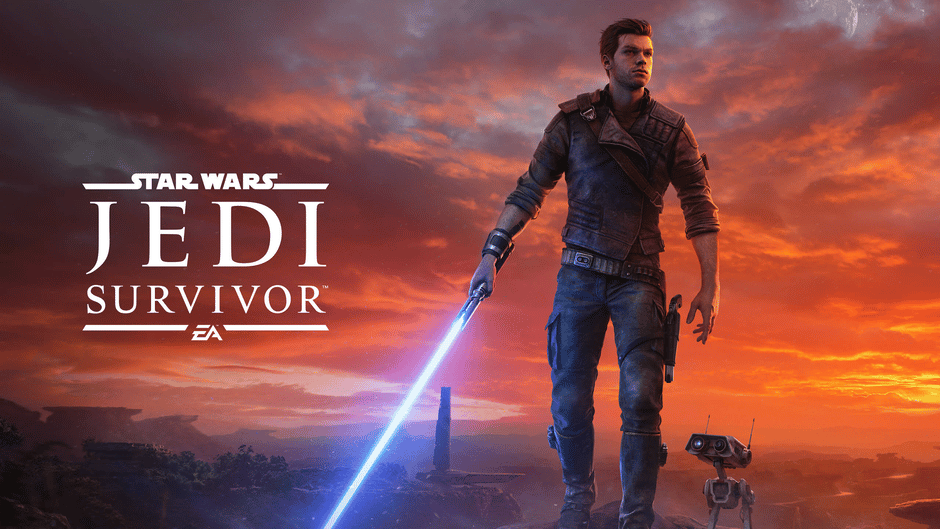 Image: Respawn Entertainment/EA via IGDB
Jedi: Survivor begins by introducing Cal’s new crew, his new family, as they embark on a covert mission to obtain secret Empire data. As is often the case with the Empire, things take a turn for the worse, and Cal’s new family is mostly lost. In a desperate move, Cal reaches out to his old family, setting the stage for everything that follows
In typical Star Wars fashion, the game’s state mirrors the phase of the protagonist’s journey. Whether he’s feeling hopeful or desperate, betrayed and vengeful or in control, the game supports and follows these emotional shifts. From the playful music during exploration to the way it swells when the moment demands, along with the beautiful and diverse environments to explore, the world feels alive and real. Looming above it all is the presence of the Empire, casting a shadow and creating risk in every endeavor the characters undertake. The game flows with twists and turns in a way that no other franchise quite matches.
The plot moves in ups and downs for the entire duration of the game, and surprises you with every chapter of the main quest. The main conflict arises when Cal uncovers a hidden, unreachable by normal means planet called Tanalorr, a planet discovered by the Republic-era Jedi, who built a temple on it. His main concern is creating a safe space to train new Jedi knights, and provide shelter for people on the run from the Empire.
While Dagan Gera, a Republic-era Jedi who fell to the Dark Side, could be seen as the main antagonist, one might argue that the true driving force—pun intended—is the Dark Side of the Force itself, pushing the characters toward their actions. Dagan seeks to claim Tanalorr for himself and the Bedlam Raiders, despite once desiring the planet for noble reasons hundreds of years ago.
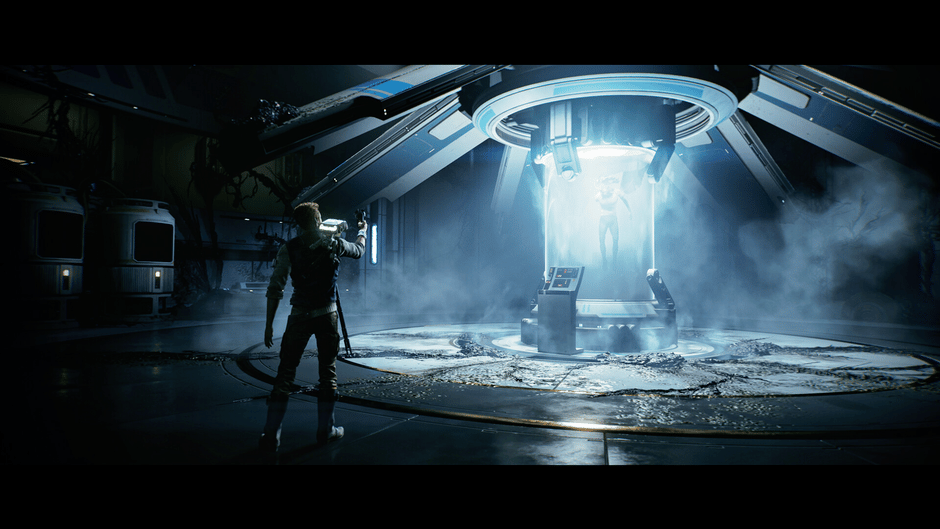 Image: Respawn Entertainment/EA via IGDB
Jedi: Survivor’s story is filled with perfectly executed plot twists that let Cal’s character grow. His constant battle with the dark side, with the need for vengeance for his fallen loved ones at the hand of betrayal offers a compelling narrative that hooks you in and does not let go.
Cal’s teetering on the edge between Light and Dark feels like a dance that seems to me like the writers intended to fully develop, but fell a bit short. Throughout the events of the game, there is simply not enough moments in which Cal embraces his anger, hate, and vengeance, which left me wanting more. These aspects of the Star Wars franchise are among the things it does best, and seeing them unfulfilled made me disappointed.
Despite that, the moments that are like the ones I described are handled masterfully, creating extremely memorable moments that make me want to replay the game just to see them again.
One thing the story lacks is the involvement of supporting characters—their interpersonal relationships and their dynamic with Cal. Aside from what was established in the first game, these characters show little growth throughout the story. Despite the game taking place five years after the first, their personalities remain unchanged. People change over that much time, and players deserve to see that progression reflected in the game. The same can be said about their relationship with Cal. It feels as though they haven’t been apart for long; they barely exchange a “Wow, it’s you!” before getting straight to business. Furthermore, except for Cal’s romance with Merrin getting more time to Merrinate(I am not sorry), which is another thing heavily set-up in game one, there’s not much change in his bond with the rest of his friends during their mission in Survivor. Towards the end of the game, during Cal’s darkest moments, is essentially the only time these characters have any real influence on him and his actions.
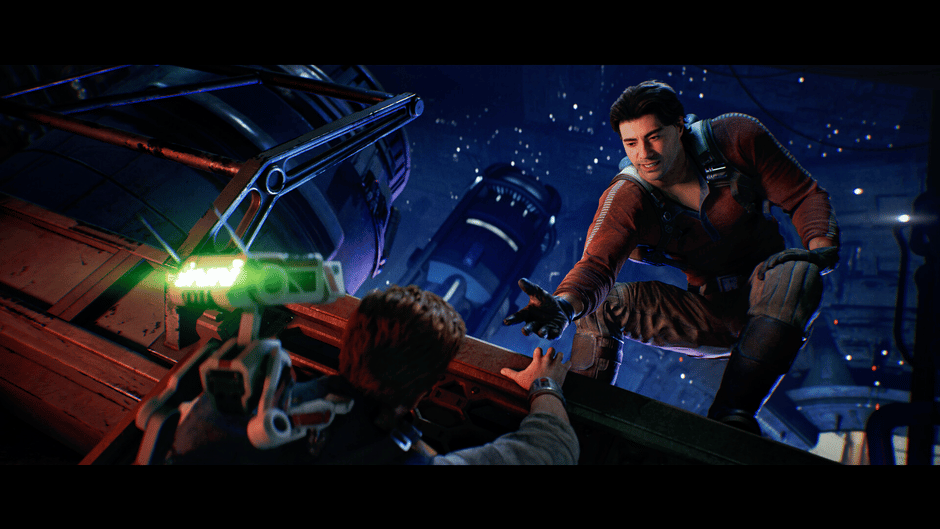 Image: Respawn Entertainment/EA via IGDB
Despite the shortcomings in character development and emotional depth, the game excels in other areas. One of the standout aspects is the gameplay, which is just as diverse and engaging as the story itself. Each new area or planet you explore is packed with traversal challenges, puzzles, and fierce enemies. As you progress through Cal’s journey, you’ll uncover locked doors and inaccessible ledges, teasing that something just out of reach lies ahead. Returning to familiar terrain with fresh abilities feels less like retracing steps and more like unlocking a hidden side of the world you didn’t know existed.
Combat follows the same pattern as the unlocks, constantly growing and evolving, which I have to say is my favorite part of the game. Just like the first game, fighting is very souls-lite, featuring the usual dodging and rolling, but is mainly block and parry focused. The combination of these offers a great deal of skill expression without raising the skill floor too high.
With Cal being a Jedi, players get access to a plethora of Force abilities for use in and out of combat, which makes room for different approaches to battles no matter your play style.
Another thing that helps the game adapt to any playstyle is the five lightsaber stances that you unlock as the story progresses: single, double-bladed, dual-wield, making a reappearance from the first game, and two new ones, blaster and crossguard. Whether you like a balanced approach to combat, slow and heavy, or a glass cannon playstyle, the stances offer it all and everything in-between.
Jedi: Survivor features a skill tree that defines what Cal can do with the Force or his stances, and is the main way in which the player expresses their playstyle. Different Force and stance techniques are unlocked by spending skill points, as well as improving Cal’s stats. If you’re a player who likes doing a lot of side-content, you’ll end up fully unlocking a good part of the skill sections, which allows for mixing and matching stances without sacrificing their effectiveness.
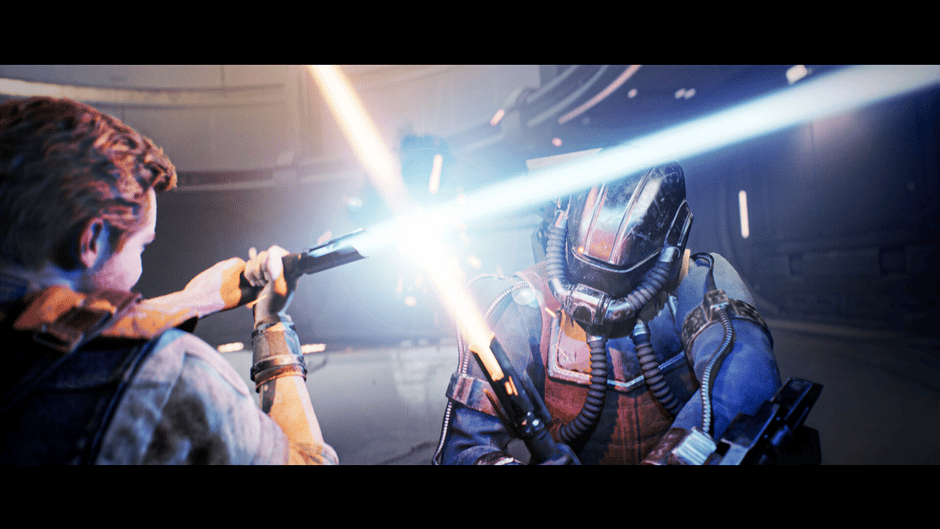 Image: Respawn Entertainment/EA via IGDB
While the gameplay introduces new layers, some of these don’t feel fully realized. Exploration ends up being predictable, since all the different barriers are overcome with only their specific countermeasure. Areas blocked off by these barriers are only blocked off by one particular type at a time, which means that as you unlock new tools you can backtrack and check those barriers off the list. I wish the developers found a way to intertwine multiple types of access restrictions, which would have made exploration feel more dynamic. Just like exploration, certain aspects of the combat lack depth, specifically the stance system. Every stance offers the same type of moves: light swing, heavy swing, force swing, special force move. The other unlockable skill tree nodes are just performance boosters for the techniques. With more depth of the skill trees and stance moves, the game could have offered players deeper build options to further refine the way they want to play.
Overall, Jedi: Survivor is a fantastic, immersive, and diverse game, with something for every type of player. Simply put, it is exactly what a Star Wars game should be. It is faithful to the franchise, fully captures all the things that make Star Wars, Star Wars. While it does have its flaws, Jedi: Survivor offers an unforgettable Star Wars experience that no fan should miss, capturing the essence of the franchise in a way few games manage.